 English
 Español
 العربية
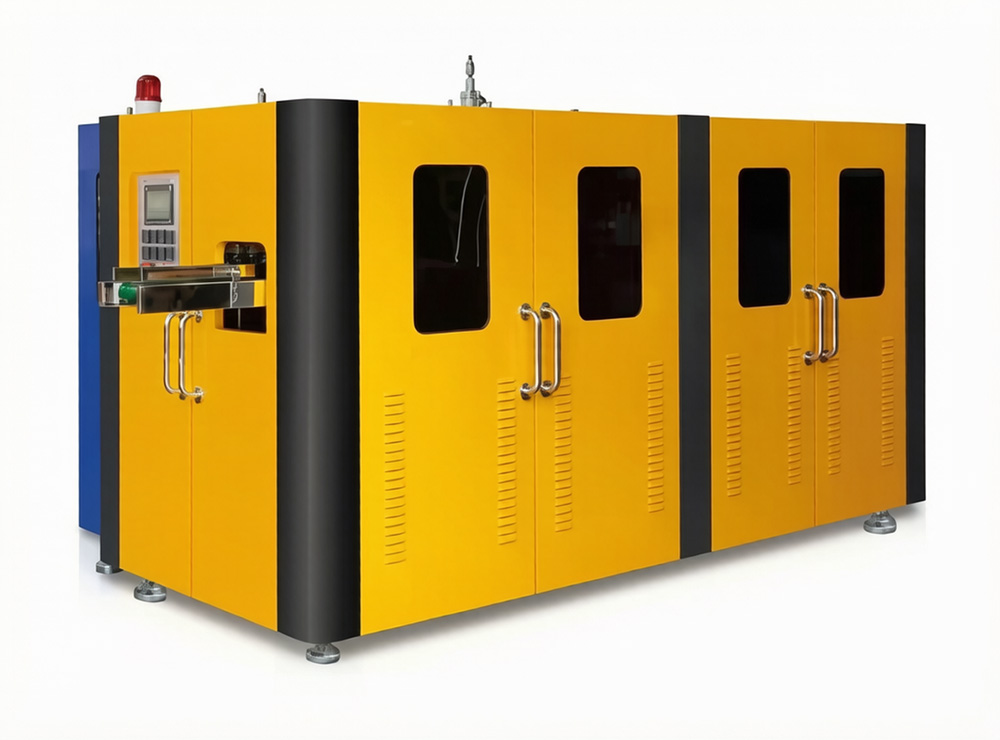
Selecting a PET stretch blow molding (SBM) machine supplier is one of the highest-impact capital decisions for beverage bottlers, water plants, edible oil processors, chemical packaging converters, and contract blow molders. A blow molding machine governs hourly bottle throughput (BPH), wall-thickness distribution, clarity and haze levels, compressed-air and electricity consumption, and long-term uptime across multi-shift production.
China offers a deep, vertically integrated manufacturing ecosystem for linear and rotary PET blow molding equipment, yet machine performance, build quality, and engineering support vary widely across factories. As a specialized Chinese manufacturer of PET blow molding machines and turnkey blowing solutions, bangemachine outlines the core technical capabilities global buyers should evaluate when vetting a blow molding equipment supplier.
1. Infrared Heating Oven Precision & Thermal Uniformity
Consistent preform heating is the foundation of stable biaxial orientation and uniform wall thickness. When evaluating a blow molding machine manufacturer, look beyond total lamp count and examine thermal control precision:
- Multi-Zone PID Lamp & Voltage Regulation: Independent heating zones with closed-loop temperature/voltage feedback allow operators to tune top, middle, and base profiles—essential for lightweight preforms, hot-fill or CSD bottles, and jars with complex shoulders.
- Reflector Geometry & Preform Rotation Stability: Precision-engineered reflectors and smooth spindle/mandrel rotation prevent localized overheating and ensure even circumferential heat absorption.
- rPET & Lightweight Preform Process Window: Higher levels of post-consumer recycled PET (rPET) or ultra-lightweight preforms can exhibit narrower processing windows; responsive heating and balanced cooling air help maintain clarity and prevent pearlescence or over-heating.
2. Clamping Unit Rigidity, Kinematics & Cycle Speed
High-pressure blowing—typically 25 to 40 bar depending on container geometry and resin—generates substantial opening forces on the mold halves. A reliable supplier engineers clamping mechanics for speed, rigidity, and low vibration:
- High-Rigidity Clamping Architecture: Robust toggle or hydraulic/servo clamping structures with hardened guide rods and precision bushings resist mold deflection, keeping parting lines crisp and preventing flash over millions of cycles.
- Smooth Acceleration & Deceleration Profiles: Servo-driven transfer, stretch rod, and mold motion reduce mechanical shock, shorten dry-cycle time, and extend wear-part life on both linear and rotary platforms.
- Scalable Cavitation (Linear to Rotary): Evaluate whether the supplier offers well-matched configurations—from compact linear machines for flexible SKUs or medium runs to high-output rotary systems for continuous high-volume production.
3. High-Pressure Pneumatics, Stretch Control & Air Recovery
Compressed air is one of the largest ongoing operating costs in a PET blow molding plant. Advanced pneumatic engineering directly lowers utility bills while improving bottle formability:
- Synchronized Pre-Blow & Stretch Rod Timing: Independent control of stretch rod velocity and early pre-blow pressure positions material accurately before high-pressure lock-off, improving base center thickness and shoulder-to-base distribution.
- High-Pressure Air Recycling / Recovery Systems: Exhaust air from high-pressure blowing can often be recaptured and reused for pre-blowing or low-pressure pneumatic functions, reducing high-pressure compressor demand and lowering per-bottle energy cost.
- Fast-Response Valves & Clean Air Filtration: High-flow, durable pneumatic valves paired with multi-stage oil/water/particulate filtration ensure consistent blow profiles and food-contact-safe air quality.
4. Mold Compatibility, Changeover Speed & Turnkey Integration
A blow molding machine delivers peak return on investment only when paired with well-matched blow molds and seamless downstream handling:
- Rapid Mold Changeover & Standardization: Quick-clamping interfaces, standardized mold mounting dimensions, and repeatable alignment fixtures reduce downtime when switching between bottle sizes or SKUs.
- Integrated Bottle Take-Out & Conveyor Synchronization: Smooth discharge conveyors, air conveyors, or orienting systems prevent bottle tip-overs, neck scuffing, and bottlenecks into filling or labeling lines.
- In-House Testing & Custom Application Engineering: Verify whether the manufacturer can test with your actual preforms, provide process parameter recipes, and support commissioning and operator training.
Technical Evaluation Matrix for PET Blow Molding Suppliers
| Evaluation Area | Basic / Entry-Level Equipment | bangemachine Engineering Standard |
|---|---|---|
| Heating & Thermal Control | Basic zone grouping; manual adjustment | Multi-zone regulated heating & tailored preform profiles |
| Pneumatic & Energy Efficiency | Standard single-stage blow without recovery | Tuned pre-blow/high-blow & air recovery options |
| Mechanical & Clamping Stability | Lighter frames suited to low-duty cycles | Rigid clamping, smooth motion & durable wear components |
| Application & Turnkey Support | Standalone machine delivery only | Bottle/preform matching, mold pairing & commissioning |
5. Conclusion: Partnering with bangemachine for Reliable Blow Molding Solutions
Choosing a reliable PET blow molding machine manufacturer in China requires evaluating thermal precision, clamping rigidity, pneumatic and air-recovery efficiency, changeover practicality, and turnkey engineering support—not just headline machine price.
As a specialized Chinese manufacturer of PET blow molding machines and complete blowing solutions, bangemachine helps beverage, water, edible oil, household/chemical, and packaging producers worldwide build efficient, scalable bottle manufacturing lines. Contact the bangemachine engineering team today to review your bottle specifications, target BPH, and turnkey equipment configuration.